
Featured
Curing is Not Waiting: Inspecting Concrete Cure and Formwork Stripping Schedules
Concrete inspection: Verify proper curing (moisture/temp) & test strength before stripping formwork/shoring.
Fiona Jake · Structural Engineer
Introduction: Durability is Achieved After the Pour
The moment concrete is placed, the focus shifts from handling plastic material to managing its long-term durability and strength. Proper curing—the process of maintaining adequate moisture and temperature—is arguably as critical as the mix design itself. Inadequate curing leads to reduced compressive strength, poor abrasion resistance, and increased permeability, directly compromising the structure's service life.
The site inspector plays a vital role in verifying that the curing methods and duration comply with specifications (such as ACI standards) and that formwork is stripped only when the concrete has achieved the necessary strength to support its own weight and any construction loads.
Section 1: Critical Curing Inspection Checks (Moisture and Temperature)
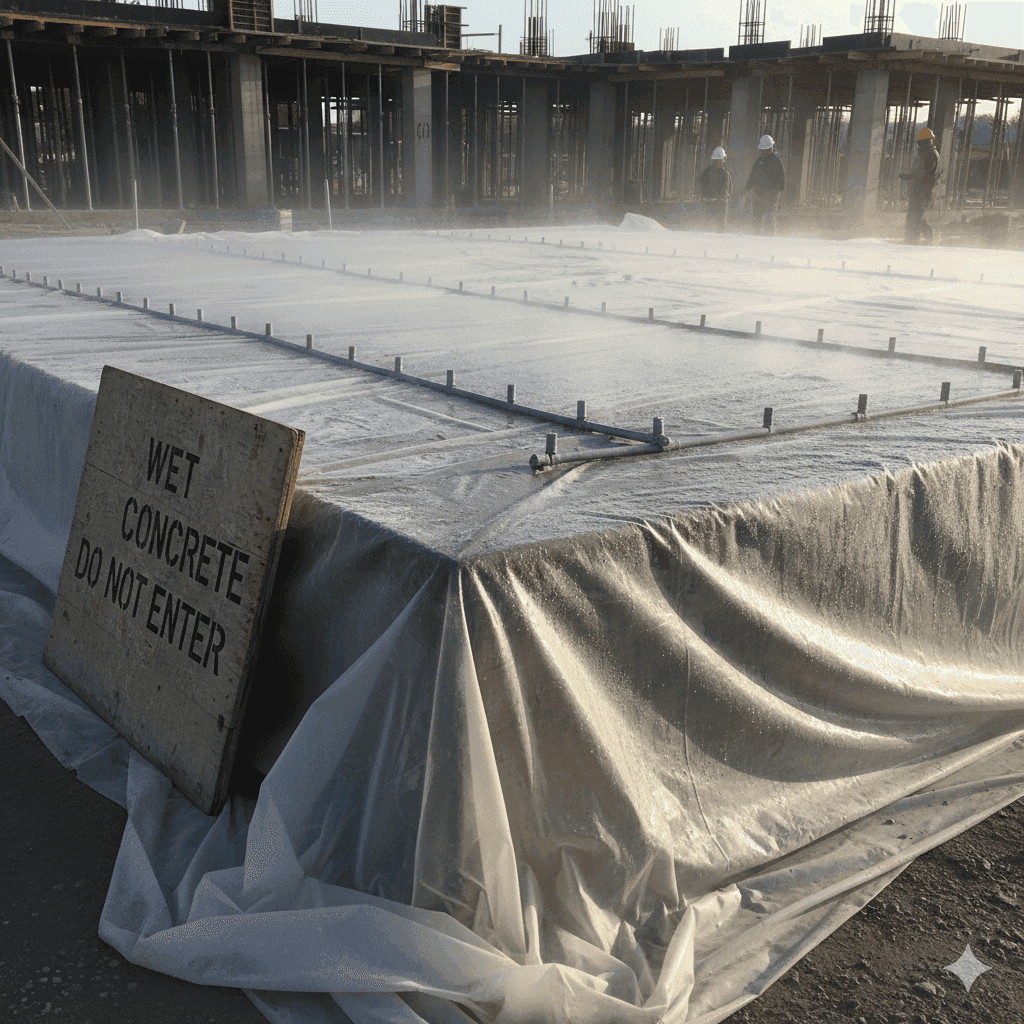
Curing is a delicate process requiring strict control over the surrounding environment. The inspector must confirm that the methods used on site actively prevent rapid moisture loss and manage temperature extremes.
Key Curing Inspection Requirements:
- Curing Method Verification: Confirm the contractor is utilizing the specified curing method (e.g., wet curing, curing compounds, or moisture-retaining covers). For wet curing, verify that the surfaces are continuously maintained in a moist condition for the specified duration (typically 7 days or until 70% of design strength is achieved).
- Curing Compound Integrity: If liquid membrane curing compounds are used, ensure the application rate is correct and the compound covers the entire surface evenly. Inspect for premature peeling or damage to the membrane.
- Temperature Control (Mass Concrete/Cold Weather): Monitor concrete temperatures, especially in mass pours or cold/hot weather. Verify that the contractor is following procedures to prevent freezing (e.g., insulation blankets) or excessive heat gain/loss, which can cause thermal cracking.
- Protection Against Wind/Sun: Ensure newly poured surfaces are shielded from rapid drying caused by high winds or direct, intense sunlight, which leads to plastic shrinkage cracking.
Section 2: Formwork Stripping and Reshoring
Formwork and shoring removal is a critical, high-risk step directly governed by the in-situ strength of the concrete. The inspector must verify that safety is maintained and structural integrity is not compromised by premature stripping.
Required On-Site Verification:
- Required Strength Verification: Confirm that the contractor has tested concrete strength (via field-cured cylinders or non-destructive testing) and that the concrete has reached the minimum required compressive strength for stripping (as defined by the structural engineer, typically 70% or 75% of design strength). Never permit stripping based solely on time elapsed.
- Reshoring Schedule: For multi-story buildings, verify the reshoring schedule is correctly implemented to ensure lower floors can safely carry the combined weight of the new slab, shoring materials, and construction loads above.
- Form Condition: Inspect the removed forms for damage or concrete adherence, indicating potential issues with form release agents or premature stripping.
- Post-Stripping Observation: Immediately inspect the exposed concrete surface for excessive deflection, cracking, or surface damage (spalling) that may have occurred during the stripping process.
Section 3: Documentation and Strength Verification
Accurate documentation of curing conditions and strength development provides the legal and technical record supporting the construction process.
The Importance of the Record:
The inspection record must include temperature logs, timestamps of curing initiation and termination, and most importantly, the date and strength results that justified formwork removal. This data is vital for project defensibility and quality control. Documentation includes verifying:
- Test Cylinder Management: Ensure that field-cured test cylinders are handled and cured under the exact same conditions as the slab/member they represent, not simply in a temperature-controlled lab.
- Date of Stripping: Accurately record the time and date that specific forms were stripped and any reshoring was installed.
- Strength Data: Link the measured compressive strength (e.g., 3-day, 7-day, 28-day cylinder breaks) to the specific member and pour location.
Disclaimer: This content is for educational purposes only and does not constitute engineering advice. Always refer to current ACI, ASTM, and local building code standards for specific project requirements.